

If you have found your way here — welcome.
The InfraTech Stack is a publication about digital foundations and intelligent infrastructure across roads, rail, buildings and utilities.
It sits alongside my book of the same name, but it is not simply a place to talk about the book. It is a place to explore the wider shift taking place around infrastructure as physical environments become more digital, more observable and more demanding — and as expectations rise around what that should make possible.
Across infrastructure, more of the physical world is starting to speak. More signals can be captured. More activity can be recorded. More conditions can be surfaced. But that does not automatically create understanding. It does not automatically create trust, prioritisation or better decisions. And it certainly does not guarantee that AI will be useful simply because it has arrived.
That is the gap this publication focuses on.
What has to be in place before infrastructure becomes not just more digital but more legible, more trustworthy and more capable of supporting better action?
This publication comes from direct experience in the space. I have spent years working around infrastructure, enterprise software, digital workflows and operational change. Long before “InfraTech” began to sound like a category, I was involved in the earlier machine-to-machine world when connected devices and operational signals first began to hint at what this space might become. Since then, I have built and worked on platforms operating at different layers of what I now think of as the stack.
What you will find here
The first posts here are the Foundation Series. They are the place to start.
They cover:
What InfraTech means
Why infrastructure is becoming more visible
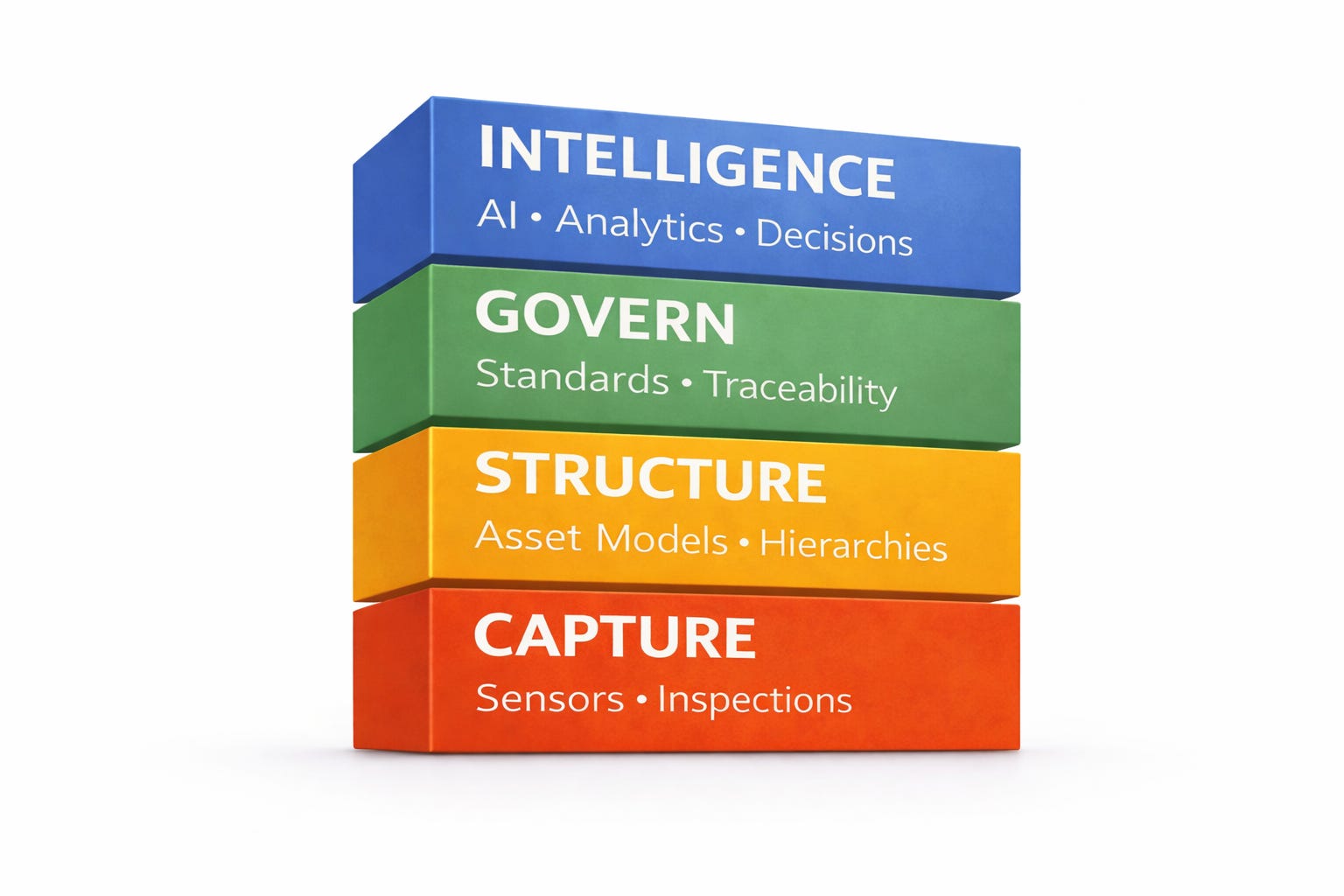
How The InfraTech Stack works
Why applications are not enough
What a stronger stack makes possible
The Five Laws of InfraTech
What AI starts to unlock
Read in order — the series builds step by step.
From there, the publication will broaden out.
Some posts will be practical and field-led — better signals, stronger questions, more useful workflows and the kinds of changes that quietly alter what an organisation is able to see and do.
Some will focus more on what the stack unlocks at an operational, strategic and leadership level — resilience, carbon, reporting, prioritisation, investment confidence and what a stronger environment makes possible.
And some will become more diagnostic — how to recognise a weak stack, where the foundations are thin and what to fix first.
This publication is for people working in and around infrastructure who are trying to make sense of a more digital, more instrumented and more demanding world — operators, engineers, asset leaders, digital and transformation teams, consultants, advisers and decision-makers who need better ways of understanding what is happening and deciding what to do next.
The tone here will be serious, practical and exploratory.
There is already plenty of noise around digital transformation, dashboards and AI. I am less interested in adding to that than in getting a little closer to what is actually going on underneath it.
Where to start
If that sounds like your kind of territory, you are in the right place.
Start with the Foundation Series.
It is the clearest introduction to the framework, the stack layers and the central idea running through this publication: stronger infrastructure intelligence depends on stronger foundations.
Welcome to The InfraTech Stack.